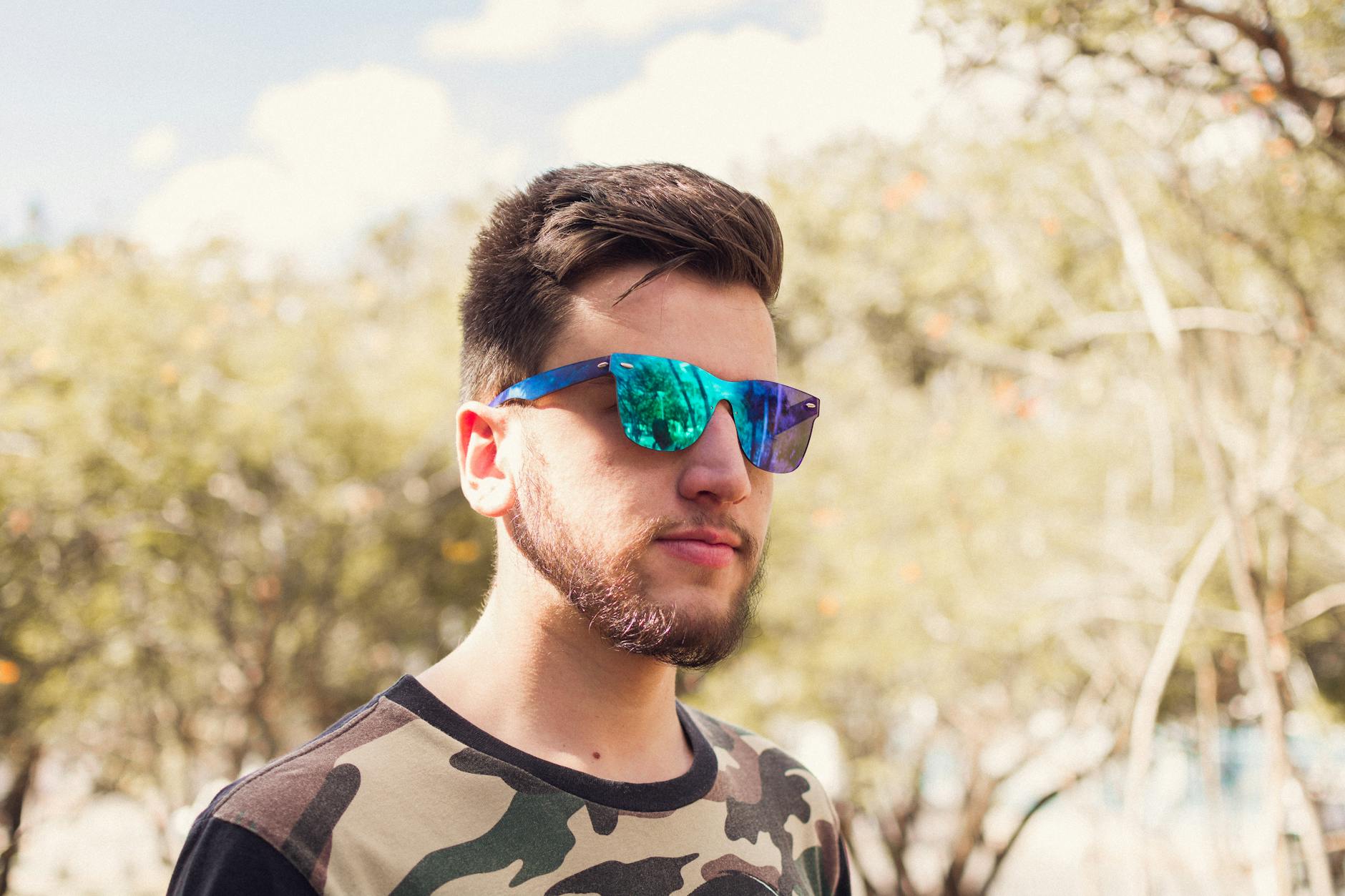
Quick Answer: Best Sunglasses for Your Face Shape
Match your sunglasses frame shape to your face shape by creating contrast: round faces look best in angular square or rectangular frames; square faces are softened by round or oval frames; oval faces can wear almost anything; heart faces suit aviators and cat-eye frames; oblong faces benefit from oversized frames with depth. The single most common mistake is buying frames that are too small — your sunglasses should be as wide as the widest part of your face.
Sunglasses are the one accessory where fit is everything. The right pair does what a good haircut does — it frames your face in a way that makes you look intentional. The wrong pair, no matter how fashionable, just looks off.
The "fit-first" principle is what frames2fit.com is built around: knowing your face shape and understanding which frame geometries create flattering contrast is the foundation for every eyewear decision. Here's the complete guide.
Step 1: Identify Your Face Shape
You need four measurements, taken loosely with a soft tape measure or estimated in the mirror:
- Forehead width: Measure at the widest point of your forehead, usually about halfway between your hairline and eyebrows.
- Cheekbone width: Measure across your face from the outer edge of one cheekbone to the other.
- Jawline width: Measure across the bottom of your face at the widest point of your jaw.
- Face length: Measure from the center of your hairline to the tip of your chin.
Oval: Face length is roughly 1.5x the face width. Cheekbones are the widest point. Jaw is slightly narrower than forehead.
Round: Face length and width are nearly equal. Cheeks are the widest point with soft curves throughout.
Square: Forehead, cheekbones, and jawline are all about equal width. Strong, angular jawline.
Heart: Wide forehead, prominent cheekbones, narrow pointed chin. Width decreases significantly toward the jaw.
Oblong: Face is significantly longer than it is wide. Forehead, cheekbones, and jaw are similar widths.
Best Sunglasses for Oval Faces
Oval is the "lucky" face shape — the proportions are balanced enough that most frame styles work well. The main guideline is to avoid frames that are too small or too narrow, which can make an oval face look elongated.
Best frame shapes: Aviators, wayfarers, square frames, cat-eye, oversized round
Avoid: Frames narrower than your cheekbones; extremely small lenses
Classic pick: Aviator-style frames are the perennial oval-face winner. The teardrop lens shape follows the natural curve of the face beautifully, and the size of the lens covers the upper face proportionally.
→ Browse polarized aviator sunglasses on Amazon
Best Sunglasses for Round Faces
Round faces benefit from frames that add structure and visual length. Angular, rectangular, and square frames create contrast against the soft curves of a round face — slimming the cheeks and making the face appear longer and more defined.
Best frame shapes: Square, rectangle, geometric, wayfarer, D-frame
Avoid: Round or circular frames (they echo the face shape); small oval frames
Key tip: Look for frames with a strong horizontal emphasis — a flat top bar or thick upper rim draws the eye across the face rather than around it, which adds the illusion of width at the top and slims the face overall.
→ Browse square sunglasses on Amazon
Best Sunglasses for Square Faces
Square faces have strong, defined jawlines and roughly equal forehead and jaw widths. The goal with frames is to soften those angles rather than compete with them. Round, oval, and curved frames provide the contrast that makes a square face look more balanced.
Best frame shapes: Round, oval, aviator, butterfly, cat-eye
Avoid: Square or rectangular frames that repeat the face's angular structure; geometric frames with sharp corners
Key tip: Rimless or semi-rimless oval frames are particularly effective for square faces — the absence of a strong frame edge softens the overall look without adding visual weight.
→ Browse round sunglasses on Amazon
Best Sunglasses for Heart-Shaped Faces
Heart-shaped faces are wider at the forehead and narrower at the chin. The ideal frame draws attention away from the wide forehead and adds visual weight toward the lower face, creating balance.
Best frame shapes: Aviator, cat-eye (with flare at the outer corners), light-rimmed oval, wayfarer, retro square
Avoid: Heavily embellished top bars; very wide frames that emphasize forehead width; cat-eye styles that upturn sharply (they draw more attention to the upper face)
Key tip: Aviators are the single most reliable frame for heart faces. The teardrop shape is slightly wider at the top but tapers down — the opposite proportion of the face itself, which creates balance without effort.
→ Browse aviator sunglasses on Amazon
Best Sunglasses for Oblong Faces
Oblong faces are significantly longer than they are wide, with a narrow face overall. The goal is to add width and make the face appear shorter. Oversized frames, deep lenses, and frames with strong decorative temples all achieve this.
Best frame shapes: Oversized square or round, wraparound, shield, D-frame, butterfly
Avoid: Small or narrow frames; rimless styles that lack visual weight; very tall narrow lenses
Key tip: Deep lenses (tall from top to bottom) are your best friend. A frame with good vertical depth — rather than a slim horizontal bar — creates the impression of a wider, more balanced face.
→ Browse oversized sunglasses on Amazon
The Frame Sizing Rule Everyone Ignores
The single most common error in buying sunglasses: frames that are too small. Most people underestimate their face width and buy frames that sit narrow and pinched, which makes every face shape look worse.
Your frames should be as wide — or slightly wider — than the widest part of your face. If the frame ends are bowing outward under the lens, the frames are too narrow. If the lens edges sit inside your cheekbone line, go a size up.
Most frame listings include a measurement in millimeters (e.g., 54-17-145). The first number is the lens width. For reference: a lens width of 52–54mm works for narrower faces, 55–58mm for average faces, and 59mm+ for wider faces.
Polarized vs. Non-Polarized: Does It Matter?
Yes — for outdoor use, polarized lenses are meaningfully better. Standard tinted lenses reduce overall brightness; polarized lenses specifically block the horizontal light waves that cause glare off water, roads, and windows. The result is sharper vision in bright outdoor conditions with less eye strain.
The only situations where polarized lenses are suboptimal: skiing (they can reduce contrast on snowy terrain) and reading digital displays (some polarized lenses interact strangely with the polarization in LCD screens). For everyday use, go polarized.
Final Fit Checklist
Before buying, run through these five checks:
- Width: Frames should be as wide as the widest part of your face — not narrower.
- Bridge fit: The nose bridge should sit flush on your nose without pinching or sliding.
- Temple length: Temples (arms) should extend straight back to your ears without bowing out or pressing in.
- Lens coverage: Lenses should cover your eyes from brow to cheek without pressing on your cheeks when you smile.
- Weight: Anything over 30g will feel heavy after an hour. Lighter frames — TR90, titanium, acetate — are better for extended wear.
The Bottom Line
The right frame shape for your face isn't about following a rigid rule — it's about creating visual balance. Use the face shape guide as your starting point, apply the sizing check before you buy, and choose polarized lenses for outdoor wear. When in doubt, an oversized frame almost always looks more intentional than a small one.
Browse by face shape category on frames2fit.com to see curated picks for your specific proportions — or start with the Amazon searches linked above if you want to find something today.